
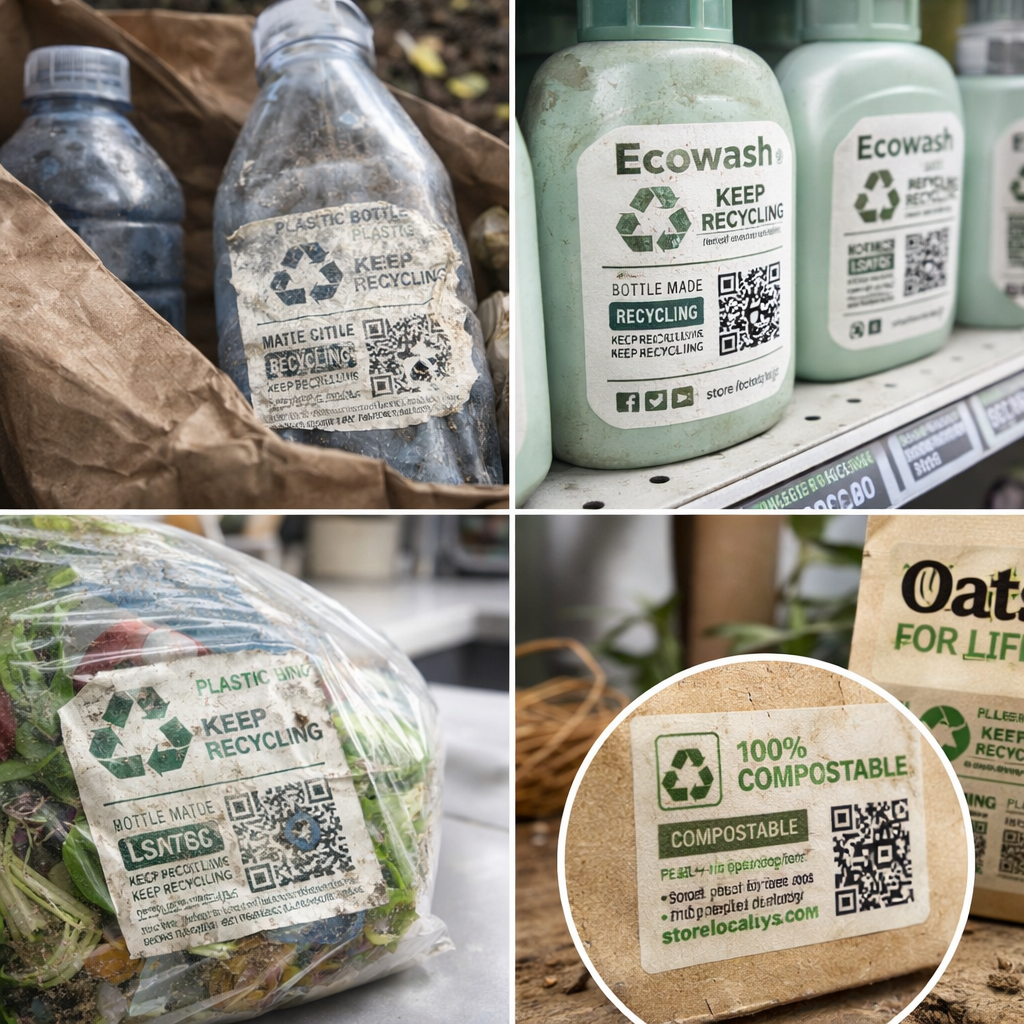
Extended Producer Responsibility (EPR) is reshaping how packaging is designed, labelled and managed across the UK. While much of the attention around EPR has focused on material recyclability and cost modulation, the durability of packaging labels plays a quieter but equally important role. Environmental labels carry essential information that helps consumers dispose of packaging correctly. If that information becomes unreadable or detaches before the product reaches end of use, the entire communication chain breaks down.
For environmental brands positioning themselves around sustainability, label durability is therefore more than a technical detail. It is a core part of compliance.
The Role of Labelling Under EPR
EPR frameworks are built around lifecycle accountability. Producers are increasingly responsible for ensuring that packaging materials can be recovered, recycled or processed appropriately once the product has been used. Labels are often the primary source of guidance for consumers deciding how to dispose of packaging.
Environmental labels may include recycling instructions, material identification codes, compostability claims or digital links to further sustainability information. These details help consumers separate waste correctly and reduce contamination within recycling systems. When instructions remain visible and intact, the likelihood of proper disposal increases.
However, if labels fade, peel or degrade prematurely, that guidance disappears. Packaging may then enter the wrong waste stream, undermining both recycling rates and producer responsibility targets.
Why Durability Matters in Real-World Conditions
Packaging rarely travels through ideal environments. Products may move through refrigerated storage, long-distance transport and retail shelving before reaching consumers. Once in use, they may be exposed to moisture, temperature fluctuations or handling that places stress on label materials.
Paper labels in particular can struggle under these conditions. Moisture absorption can cause them to wrinkle or tear, while low-grade adhesives may lose tack when exposed to condensation or cold temperatures. Inks not designed for environmental exposure may fade when subjected to light or abrasion.
For brands making strong environmental claims, degraded labels present a reputational risk. Recycling symbols, compostability statements or sustainability certifications must remain clearly visible throughout the product’s lifecycle. If they disappear halfway through that journey, the packaging fails to communicate its intended message.
Supporting Clear Recycling Communication
One of the central goals of EPR is improving the quality of recycled materials. Contamination in recycling streams often occurs when consumers are uncertain how to dispose of packaging components. Clear labelling helps reduce this confusion.
Durable environmental labels ensure that recycling guidance remains legible from the moment a product leaves the factory to the point where the packaging is discarded. This continuity supports better waste sorting and helps ensure that recyclable materials actually reach recycling facilities.
Where QR codes are used to provide extended environmental information, durability becomes even more important. Codes must remain scannable throughout distribution and use if they are to serve their purpose.
Choosing Materials That Match Environmental Goals
Environmental labels designed for durability typically use synthetic film materials and adhesives engineered to withstand moisture, temperature variation and handling. These constructions protect printed information while maintaining secure adhesion to a wide range of packaging surfaces.
At the same time, label materials must remain compatible with the recycling process of the primary packaging. Selecting the right combination of face stock, adhesive and print method helps ensure that durability does not compromise recyclability.
Designing for Compliance and Credibility
As EPR enforcement develops, environmental claims will face greater scrutiny. Brands that promote recyclability or sustainability must ensure that the information guiding those claims remains visible and reliable throughout the packaging lifecycle.
Durable environmental labels help maintain that reliability. They protect recycling guidance, preserve sustainability messaging and support the broader objectives of EPR frameworks.
For environmental brands, durability is therefore not simply a packaging specification. It is part of responsible, credible and compliant design.